
ADS-B Explained: How It Works and the FAA Mandate
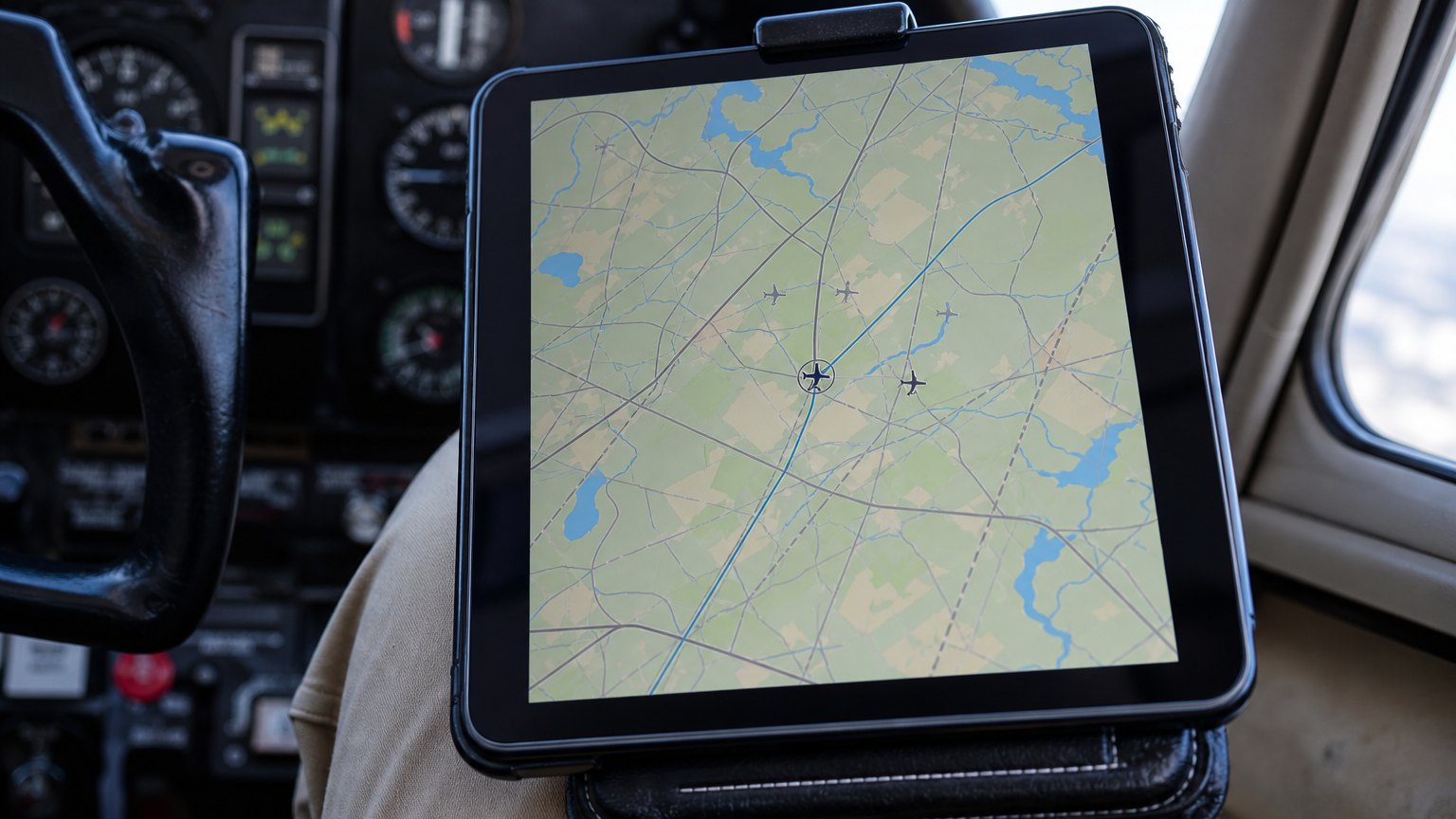
Glance at your tablet mid-flight and there's a little aircraft icon crawling across the screen, altitude and speed tagged right next to it. That's ADS-B at work. Automatic Dependent Surveillance-Broadcast works out an aircraft's own position from GPS, then announces it, along with altitude, velocity and identity, to anyone bothered to listen.
It sounds like a minor trick, but it's quietly rebuilt how the FAA tracks every aircraft in the National Airspace System, and it's why you see nearby traffic on a screen instead of squinting into the haze hoping for the best. Here's what ADS-B actually does, why ADS-B Out and ADS-B In are not the same thing, when you need 1090ES instead of UAT, whether the mandate applies to you, how it fits into the FAA's NextGen programme, and why a war on the other side of the world has turned GPS reliability into a live question for pilots flying with it.
Quick Answer
ADS-B is a satellite-based surveillance technology that lets an aircraft broadcast its own GPS-derived position, altitude and velocity at least once per second, per the FAA's performance rule in 14 CFR 91.227. ADS-B Out transmits that data to ground stations and other aircraft; ADS-B In receives it, plus free traffic and weather. The FAA required ADS-B Out in specified US airspace from 1 January 2020, under 14 CFR 91.225.
Key Takeaways
ADS-B is GPS-based broadcast surveillance that works alongside radar, not a wholesale replacement for it.
ADS-B Out (transmit) and ADS-B In (receive) are independent capabilities; only Out is mandated by the FAA.
1090ES is the globally recognised link and is required at or above FL180 or for international flights; UAT (978 MHz) is a US-only link limited to below FL180.
The FAA's ADS-B Out mandate under 14 CFR 91.225 took effect on 1 January 2020 for specified airspace.
ADS-B is a foundational surveillance technology within the FAA's NextGen modernisation programme.
Because ADS-B depends entirely on GPS, the GPS jamming and spoofing reported near the war in Ukraine has become a real, ongoing challenge to its reliability in some regions.
In This Article

What Is ADS-B?
ADS-B stands for Automatic Dependent Surveillance-Broadcast, a mouthful hiding a simple idea: the aircraft works out its own position and shares it, uninvited. SKYbrary notes that "dependent" isn't filler. The whole system is only as accurate as the aircraft's own navigation source, almost always GPS, rather than an independent measurement taken from the ground.
Compare that with the radar you already picture inside a control tower. Traditional secondary surveillance radar interrogates a transponder and times the reply: it asks a question, then measures the echo. ADS-B skips the interrogation entirely. The aircraft already knows where it is, so it announces its position once a second or faster, whether anyone's listening or not.
Around the world, that announcement travels almost everywhere on the 1090 MHz frequency, using a technique called Mode S Extended Squitter, known in the trade simply as 1090ES. The United States adds a second option, the Universal Access Transceiver or UAT, which broadcasts at 978 MHz but only works below Flight Level 180, according to the FAA.
Strip away the acronyms and one job remains: tell everyone nearby exactly where you are, constantly. Everything else in this guide is detail stacked on top of that single idea.
Expert Insight: ADS-B is not a replacement for radar everywhere. Secondary surveillance radar remains in service across controlled airspace, and ADS-B works alongside it as an additional, GPS-derived surveillance layer.
Source: SKYbrary, Automatic Dependent Surveillance-Broadcast (ADS-B)
How Does ADS-B Work?
Underneath the acronym, ADS-B is three systems working in relay. GPS tells the aircraft where it is. An air data computer or altimeter supplies pressure altitude. A GPS-derived source works out ground speed and track. Bundle that with the aircraft's registration or call sign, and you've got the package ADS-B broadcasts to the world.
That package cannot dawdle. The FAA's ADS-B Out performance rule, 14 CFR 91.227, requires a broadcast at least once a second, with the reported position no more than 2.0 seconds old and no more than 0.6 seconds of that gap left uncorrected. Ground stations across the country pick up the signal and feed it into FAA air traffic automation. Any other equipped aircraft nearby can pick up the same broadcast directly, aircraft to aircraft, with no ground infrastructure involved at all.
Here's the part that's been impossible to ignore since 2022. ADS-B's accuracy rests entirely on GPS, and GPS signals can be jammed or spoofed. Since Russia's invasion of Ukraine, pilots and aviation authorities operating near the Baltic states, the Black Sea and parts of Eastern Europe have reported a marked rise in GPS interference, sometimes strong enough to send an aircraft's displayed position drifting far from where it actually is. When the underlying GPS fix degrades, the ADS-B broadcast built on top of it degrades with it, which is why European regulators have issued specific guidance for crews operating in affected airspace.
That's not a reason to distrust ADS-B everywhere. It's a reminder that ADS-B is dependent surveillance in the truest sense: it can only ever be as reliable as the GPS signal feeding it.
Expert Insight: The 2.0 second latency ceiling and 0.6 second uncompensated limit exist so that a position reported at the moment of broadcast is still close enough to reality for controllers and other pilots to trust it for separation. That trust assumes the GPS feeding the system is clean, which is exactly what jamming threatens.
Source: 14 CFR 91.227, ADS-B Out equipment performance requirements
ADS-B never asks permission to transmit. It broadcasts continuously, whether anyone's listening or not, which is exactly why it scales so well over remote terrain and oceanic routes where radar coverage gives up. It's also why a jammed GPS signal is such a stubborn problem: the system keeps broadcasting with total confidence, even when the position underneath it has quietly gone rogue.
ADS-B Out vs ADS-B In: What Is the Difference?
ADS-B Out is the transmitting half of the system: your aircraft broadcasts its own position, altitude and velocity so air traffic control and other equipped aircraft can see you. ADS-B In is the receiving half: an onboard or portable receiver picks up broadcasts from other aircraft and ground stations, then puts that information on a compatible screen.
The two are entirely separate capabilities, and an aircraft can legally have one without the other. Plenty of aircraft flying today carry certified ADS-B Out to satisfy the FAA mandate but skip ADS-B In entirely, which means the pilot is visible to everyone else, like a spotlight, but can't see a thing in return.
A Pilotised reader who bounces between several rental and club aircraft described exactly this asymmetry. Some of the aircraft he flies have ADS-B Out but not ADS-B In, so on those flights his only traffic picture is whatever ATC bothers to call out. He eventually built his own portable ADS-B In receiver, which pairs with ForeFlight over Wi-Fi and shows nearby traffic, including tail numbers, altitude and airspeed, with zero cell signal needed to run something like FlightRadar24 aloft. Knowing another aircraft's tail number, he noted, is genuinely useful if you need to call that traffic directly on frequency.
That anecdote sums it up nicely. ADS-B In turns a compliance-only ADS-B Out installation into an actual situational-awareness tool in the cockpit, not just a box that keeps you legal.
Capability | What it does | Verdict |
|---|---|---|
ADS-B Out | Transmits your GPS-derived position, altitude and velocity to ATC and other aircraft | Required by the FAA in specified airspace under 14 CFR 91.225 |
ADS-B In | Receives traffic and weather broadcasts from ground stations and nearby aircraft | Not mandated, but strongly recommended for situational awareness |
Out and In combined | Full two-way picture: you are seen, and you can see others | Best setup for most GA pilots who fly regularly in controlled or busy airspace |
Expert Insight: ADS-B In traffic and weather data are advisory only. Pilots should treat cockpit traffic displays as a supplement to, never a substitute for, the see-and-avoid concept described in the FAA Aeronautical Information Manual.
Source: Federal Aviation Administration, Aeronautical Information Manual
1090ES vs UAT (978 MHz): Which Link Do You Need?
1090ES and UAT are the two radio links the FAA allows for ADS-B Out in the United States, and the choice between them comes down almost entirely to where and how high you fly. 1090ES uses the same 1090 MHz frequency as Mode S transponders worldwide. UAT is a US-only link on 978 MHz, built to give general aviation a cheaper way in.
Anyone operating at or above Flight Level 180, or crossing into international airspace, needs 1090ES, because it's the link the International Civil Aviation Organization recognises globally, reflected in ICAO standards and the parallel European ED-102A specification from EUROCAE. UAT simply stops working above FL180, and no country outside the United States recognises it.
UAT does have one real advantage for domestic pilots flying below FL180: it delivers free traffic (TIS-B) and weather (FIS-B) directly on the same 978 MHz link, with no second receiver required. A 1090ES-only aircraft can still get that traffic picture, but usually through a ground-based rebroadcast service called ADS-R, which is covered in more detail below.
Link | Best for | Verdict |
|---|---|---|
1090ES (1090 MHz) | Flights at or above FL180, international operations, aircraft that already carry a Mode S transponder | Mandatory choice above FL180; the only link recognised outside the US |
UAT (978 MHz) | Domestic GA flying below FL180 that wants integrated free traffic and weather | Simpler and often cheaper for low-altitude US-only flying |
Expert Insight: Pilots who fly a mix of low-altitude local flights and the occasional flight above FL180 sometimes install both links, known as a dual-link setup, so the aircraft is compliant in every altitude band it might reach.
Source: Federal Aviation Administration, Automatic Dependent Surveillance-Broadcast (ADS-B)
Is ADS-B Mandatory? The FAA Mandate Deadline Explained
Yes. ADS-B Out is mandatory in specified US airspace. The FAA's rule, codified at 14 CFR 91.225, has required ADS-B Out equipment carriage and operation since 1 January 2020, for aircraft flying in airspace that includes Class A, B and C airspace, and above 10,000 feet MSL over the contiguous United States, among other specified areas.
ADS-B In, by contrast, has never been mandated. You can be fully legal with ADS-B Out alone and never install a traffic or weather receiver, though doing so means giving up the free situational-awareness benefits described later in this guide.
The mandate applies by airspace, not by aircraft category, so the deciding question is always where you intend to fly rather than what you fly. A pilot who never leaves uncontrolled airspace below 10,000 feet might not need ADS-B Out under the letter of the rule, but should verify that against the current text of 14 CFR 91.225 and any local airspace exceptions before assuming an exemption applies.
Safety Note: Airspace rules change and exceptions exist. Verify your specific requirement against the current text of 14 CFR 91.225, the FAA's ADS-B equipage pages, and your aircraft's approved equipment list before you fly, and do not rely on this article as your sole compliance reference.
How Does ADS-B Relate to NextGen?
ADS-B is one of the foundational surveillance technologies inside the FAA's NextGen programme, the agency's long-running modernisation of the US air traffic system. The FAA's NextGen overview describes a shift away from older ground-based, radar-centric surveillance and navigation toward satellite-based technologies, of which ADS-B is a core pillar alongside satellite navigation and digital data communications.
Before ADS-B, controllers relied almost entirely on secondary surveillance radar, which is expensive to install and maintain, and leaves coverage gaps at low altitude and over mountainous or oceanic terrain. ADS-B ground stations are far cheaper to deploy and can fill many of those gaps, which is part of why the FAA folded the ADS-B mandate into the broader NextGen effort rather than treating it as a standalone rule.
For you as a pilot, the practical effect is a denser, more accurate national surveillance picture, which in turn supports the free traffic and weather broadcast services covered next. That whole picture, though, leans on GPS being trustworthy, an assumption GPS jamming near conflict zones now puts under real pressure.
Expert Insight: NextGen is not a single system pilots install; it is the FAA's umbrella modernisation programme, and ADS-B is the piece of it that individual aircraft owners actually have to equip for.
Source: Federal Aviation Administration, NextGen
TIS-B, FIS-B and ADS-R: The Benefits of ADS-B In
Traffic Information Service-Broadcast, or TIS-B, is a free FAA ground service that uplinks radar-derived traffic data to ADS-B In receivers, so an ADS-B In equipped aircraft can see nearby traffic that is not itself ADS-B Out equipped. Flight Information Service-Broadcast, or FIS-B, is the parallel free weather service, delivering products such as METARs, TAFs and NEXRAD imagery to a UAT receiver.
Because 1090ES and UAT sit on different frequencies, a 1090ES-only aircraft cannot receive UAT-based FIS-B weather directly, and a UAT-only aircraft flying above FL180 loses its link entirely. The FAA bridges this gap with ADS-R, Automatic Dependent Surveillance-Rebroadcast, which takes a 1090ES aircraft's position and rebroadcasts it on UAT for nearby UAT receivers, and does the same in reverse for UAT aircraft being seen by 1090ES receivers.
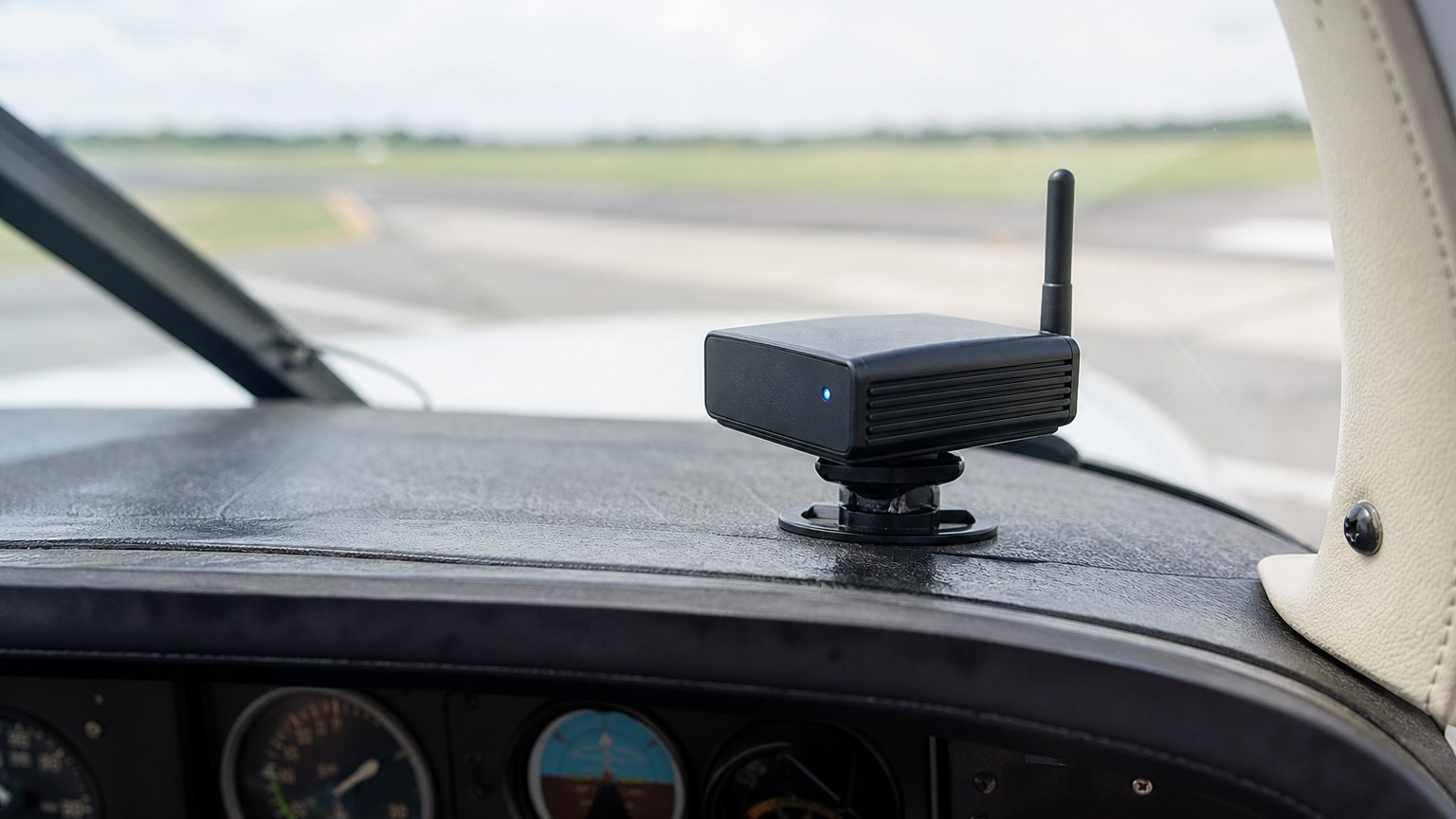
The real-world benefit matches how pilots actually use it. A cockpit traffic display shows other aircraft's tail numbers, altitude and speed, handy for a radio call, and it keeps working with zero cell signal, unlike a phone-based tracking app. That's exactly the gap portable ADS-B In receivers fill for pilots flying aircraft that only have ADS-B Out.
Expert Insight: TIS-B traffic data depends on ground station coverage and on the target aircraft carrying at least ADS-B Out or an active transponder being tracked by radar. Gaps in ground coverage, particularly at low altitude in remote areas, mean TIS-B traffic pictures are never guaranteed to be complete.
Source: Federal Aviation Administration, Automatic Dependent Surveillance-Broadcast (ADS-B)
Before You Fly
Confirm whether the airspace you plan to use requires ADS-B Out under 14 CFR 91.225.
Check whether your planned altitude and route calls for 1090ES, UAT, or both links.
Verify your ADS-B Out installation is actually broadcasting correctly using the FAA's PAPR tool before relying on it operationally.
If you use ADS-B In, confirm your receiver and display are correctly paired before departure, not after you notice a blank traffic screen airborne.
Treat any ADS-B In traffic or weather picture as advisory only, and keep scanning outside the cockpit.
If you are flying anywhere near a known GPS interference zone, cross-check your displayed position against other navigation sources rather than trusting it blindly.
Choosing ADS-B Equipment: Certified vs Portable
Certified ADS-B Out equipment is panel-mounted, installed under an FAA-approved installation, and is the only option that satisfies the mandate under 14 CFR 91.225. Portable ADS-B In receivers, by contrast, are receive-only devices that pair with a tablet app such as ForeFlight and need no certification, because they never transmit and therefore cannot satisfy the Out mandate.
This is where pilots make the most expensive mistake in this whole guide: buying a portable receive-only unit and assuming it makes the aircraft legal for mandated airspace. It doesn't. A portable unit only ever adds ADS-B In capability; it cannot substitute for certified ADS-B Out, no matter how badly you want it to.
Equipment type | Best for | Verdict |
|---|---|---|
Certified panel ADS-B Out | Meeting the FAA mandate for controlled or high-altitude airspace | Required; the only option that satisfies 14 CFR 91.225 |
Portable ADS-B In receiver | Adding free traffic and weather to aircraft that already have compliant Out equipment, or to aircraft with none | Useful add-on, never a substitute for certified Out equipment |
Combined certified Out/In panel unit | New installations or panel upgrades where budget allows a single integrated system | Cleanest long-term option, though the most expensive upfront |
Expert Insight: Owners should confirm any installed ADS-B equipment against the aircraft's approved equipment list and current FAA guidance before assuming compliance, since equipment that met an earlier standard may not satisfy today's performance requirements.
Source: AOPA, ADS-B
How ADS-B Evolved: From Capstone to Today's Standards
ADS-B didn't arrive with a single announcement. It crept in over roughly three decades of trial, argument and refinement, and its real proving ground was about as unglamorous as aviation gets: rural Alaska.
The FAA's Alaska Capstone programme ran from 1999 to 2006, in a state where mountains swallow radar coverage and small aircraft fly low over terrain no radar dish will ever reach. Capstone put ADS-B to a hard test: could an aircraft broadcasting its own GPS position genuinely substitute for a surveillance system radar could never fully provide out there. It worked well enough that the rest of the ADS-B story follows directly from that result.
What followed reads like a slow-motion software update, minus the nagging pop-ups. RTCA published the first mature 1090ES standard, DO-260, alongside its European twin, EUROCAE's ED-102, in 2000. A refinement, DO-260A, arrived in 2003, closing gaps the original draft had left open. Then came DO-260B in 2009, the version pilots know as Version 2 and the one that still underpins most of today's mandated US fleet. The newest revision, DO-260C or Version 3, showed up between 2020 and 2021 and is now referenced in current regulation through TSO-C166c, bringing tighter data integrity that future services may eventually expect.
EUROCAE's companion ED-129 family does the same job for ground-based ADS-B systems, which is a large part of why European and American installations remain broadly interoperable on the 1090ES link despite decades of separate development.
Expert Insight: Knowing which DO-260 version your installed equipment meets matters for interoperability. Version 2 (DO-260B) equipment remains widely accepted, but newer Version 3 (DO-260C) units, referenced through TSO-C166c, offer improved data integrity that some future services may eventually expect.
Source: RTCA, Inc., DO-260 series Minimum Operational Performance Standards
Common ADS-B Mistakes Pilots Make
The most common, and most expensive, mistake: assuming a portable ADS-B In receiver satisfies the mandate. It doesn't. 14 CFR 91.225 requires certified transmitting equipment, and a receive-only portable unit never transmits a thing.
A second common mistake is installing certified equipment and never confirming it's actually broadcasting correctly. The FAA offers a free tool for exactly this purpose.
Request a Performance Report through the FAA's ADS-B Performance Report Request (PAPR) service after a flight in coverage. It analyses your aircraft's actual broadcasts against the performance requirements in 14 CFR 91.227 and flags problems such as incorrect ICAO address programming or unstable position quality. Skip this step, and you may fly for months believing your equipment is compliant when it isn't.
A third mistake: choosing UAT for an aircraft that regularly climbs above FL180 or occasionally flies internationally, then discovering the hard way that UAT quits working at that altitude and isn't recognised outside the United States. A fourth, newer mistake is trusting a GPS-derived position blindly in regions where jamming or spoofing has been reported. Since the Ukraine war intensified GPS interference across parts of Eastern Europe, that once-rare failure mode has become something crews in the affected regions plan for as routine.
Expert Insight: Requesting a PAPR report after your first flight with new or newly installed ADS-B equipment is one of the cheapest and most effective checks an owner can make, and it costs nothing beyond the flight itself.
Source: Federal Aviation Administration, ADS-B Performance Report Request (PAPR)
Fly with the latest
New guides, tools, and references, straight to your inbox. No spam, unsubscribe anytime.
Frequently Asked Questions: ADS-B
What is the difference between ADS-B Out and ADS-B In?
ADS-B Out transmits your aircraft's position, altitude and velocity to ATC and other aircraft; ADS-B In receives broadcasts from others, including free traffic and weather. The two are independent, and only Out is required under 14 CFR 91.225.
What is the difference between 1090ES and UAT (978)?
1090ES operates on 1090 MHz and is required at or above FL180 and for international flights. UAT operates on 978 MHz, works only below FL180, and is recognised solely within the United States, per the FAA's ADS-B equipage guidance.
Is ADS-B mandatory?
ADS-B Out is mandatory in specified US airspace, including Class A, B and C airspace and above 10,000 feet MSL, under 14 CFR 91.225. ADS-B In has never been mandated by the FAA.
What is the ADS-B Out mandate deadline?
The FAA's ADS-B Out compliance requirement took effect on 1 January 2020 for the specified airspace listed in 14 CFR 91.225. Aircraft operating in that airspace after that date must carry compliant, functioning ADS-B Out equipment.
How does ADS-B relate to NextGen?
ADS-B is a core surveillance technology within the FAA's NextGen air traffic modernisation programme, replacing much of the older radar-dependent surveillance model with satellite-based broadcast positioning, according to the FAA's NextGen overview.
Can I use a portable ADS-B In receiver instead of certified ADS-B Out?
No. A portable receive-only unit cannot satisfy the ADS-B Out mandate because it never transmits. Only certified, installed ADS-B Out equipment meeting 14 CFR 91.227 performance standards satisfies the mandate.
Do I need both 1090ES and UAT?
Only if you regularly fly both below FL180 domestically and at or above FL180, or internationally. Many owners choose a dual-link installation specifically to stay compliant across every altitude band they might reach.
What is TIS-B and how is it different from FIS-B?
TIS-B is the FAA's free ground-based traffic broadcast service; FIS-B is the parallel free weather broadcast service, delivered over UAT. Both require an ADS-B In receiver to display in the cockpit.
What is ADS-R and why does it matter?
ADS-R, Automatic Dependent Surveillance-Rebroadcast, converts 1090ES traffic to UAT and vice versa, so aircraft on either link can see traffic broadcasting on the other. Without it, 1090ES and UAT aircraft could not see each other's ADS-B Out broadcasts.
How do I check if my ADS-B Out installation is actually compliant?
Fly in coverage, then request a free report through the FAA's ADS-B Performance Report Request (PAPR) service. It checks your broadcasts against the 14 CFR 91.227 performance rule and flags problems such as bad ICAO codes.
Does ADS-B replace radar?
No. ADS-B works alongside secondary surveillance radar rather than replacing it everywhere, according to SKYbrary. Radar remains active across much of controlled airspace even where ADS-B ground stations also provide coverage.
Can I see other aircraft's tail numbers with ADS-B In?
Yes. ADS-B In displays typically show a nearby aircraft's registration or call sign along with altitude, speed and position, which is genuinely useful if you need to call that traffic directly on frequency.
Why does my ADS-B In show no traffic when there is no cell signal?
ADS-B In does not rely on cell data at all; it receives broadcasts directly over radio frequency from ground stations and nearby aircraft. If you see no traffic, the likely cause is a receiver pairing issue or a genuine lack of coverage, not a lack of cell signal.
What altitude does UAT stop working above?
UAT is limited to operations below Flight Level 180. Above that altitude, only 1090ES is recognised for ADS-B Out under FAA rules, so aircraft that climb into the flight levels need 1090ES equipment.
Is ADS-B accurate enough to replace visual scanning for traffic?
No. ADS-B In traffic data is advisory only, and coverage gaps exist. The FAA's Aeronautical Information Manual continues to emphasise see-and-avoid as the primary method of traffic separation for visual flight.
Has the war in Ukraine affected ADS-B or GPS reliability for pilots?
Yes, in the sense that matters most. ADS-B's accuracy depends entirely on GPS, and pilots and aviation authorities have reported a sharp rise in GPS jamming and spoofing near the conflict, particularly around the Baltic states, the Black Sea and parts of Eastern Europe, since Russia's invasion of Ukraine. Crews operating in those regions are advised to cross-check their position against other navigation sources rather than trust a GPS-derived display alone.
Sources and References
Federal Aviation Administration. Automatic Dependent Surveillance-Broadcast (ADS-B). https://www.faa.gov/air_traffic/technology/equipadsb
Electronic Code of Federal Regulations. 14 CFR 91.225, ADS-B Out equipment and use. https://www.ecfr.gov/current/title-14/chapter-I/subchapter-F/part-91/subpart-C/section-91.225
Electronic Code of Federal Regulations. 14 CFR 91.227, ADS-B Out equipment performance requirements. https://www.ecfr.gov/current/title-14/chapter-I/subchapter-F/part-91/subpart-C/section-91.227
Federal Aviation Administration. Aeronautical Information Manual. https://www.faa.gov/air_traffic/publications/atpubs/aim_html/
SKYbrary. Automatic Dependent Surveillance-Broadcast (ADS-B). https://skybrary.aero/articles/automatic-dependent-surveillance-broadcast-ads-b
AOPA. ADS-B. https://www.aopa.org/go-fly/aircraft-and-ownership/ads-b
Federal Aviation Administration. NextGen. https://www.faa.gov/nextgen
International Civil Aviation Organization. https://www.icao.int
RTCA, Inc. DO-260 series Minimum Operational Performance Standards. https://www.rtca.org
EUROCAE. https://www.eurocae.net
Federal Aviation Administration. ADS-B Performance Report Request (PAPR). https://adsbperformance.faa.gov